Small Business, Big Web: Demystifying Your Digital Debut
Why a Website for Small Business Matters More Than Ever
A website for small business is no longer optional—it's the digital storefront 97% of consumers visit before making a purchase. Yet, half of all small businesses still don't have one, leaving money on the table daily.
A professional website is essential for:
- Credibility: 36% of consumers won't trust a business without a website.
- Visibility: Your customers are among the 3.5 billion daily Google searches.
- Control: You own your website, unlike social media where reach is limited.
- Sales: A website works 24/7 to showcase services and capture leads automatically.
- Growth: E-commerce and online bookings continue to expand rapidly.
Your competitors are online, your customers expect you to be, and even banks may require a website for business loans. The good news is that getting started is more accessible than you think. You don't need a massive budget, just a clear understanding of what your business truly needs.
I'm Angela D., and I've spent my career helping small businesses grow through SEO and website optimization. I've seen how the right website transforms a business—and how the wrong one wastes money. This guide will cut through the confusion and help you get online the right way.
The Digital Imperative: Why Your Small Business Needs a Website
A digital presence is a requirement for survival and growth. Since most consumers search online for products and services, not having a website makes your business invisible to a massive audience.
A website serves as your business's central hub, providing:
- Credibility and Trust: A professional site signals legitimacy and builds consumer confidence.
- 24/7 Availability: It works around the clock to inform customers and capture opportunities.
- Controlled Narrative: You control your brand's story and message without third-party platform limitations.
- Competitive Edge: In markets like McAllen, San Antonio, or Houston, a strong online presence can put you far ahead of competitors.
A website is a non-negotiable asset for modern business. For more insights, explore our guide on Reasons Why a Small Business Needs a Website.
The Core Foundations: Essential Pages for Every Small Business Website
Your website needs a clear structure to guide visitors. Think of it as a digital storefront with essential sections to inform and convert customers.
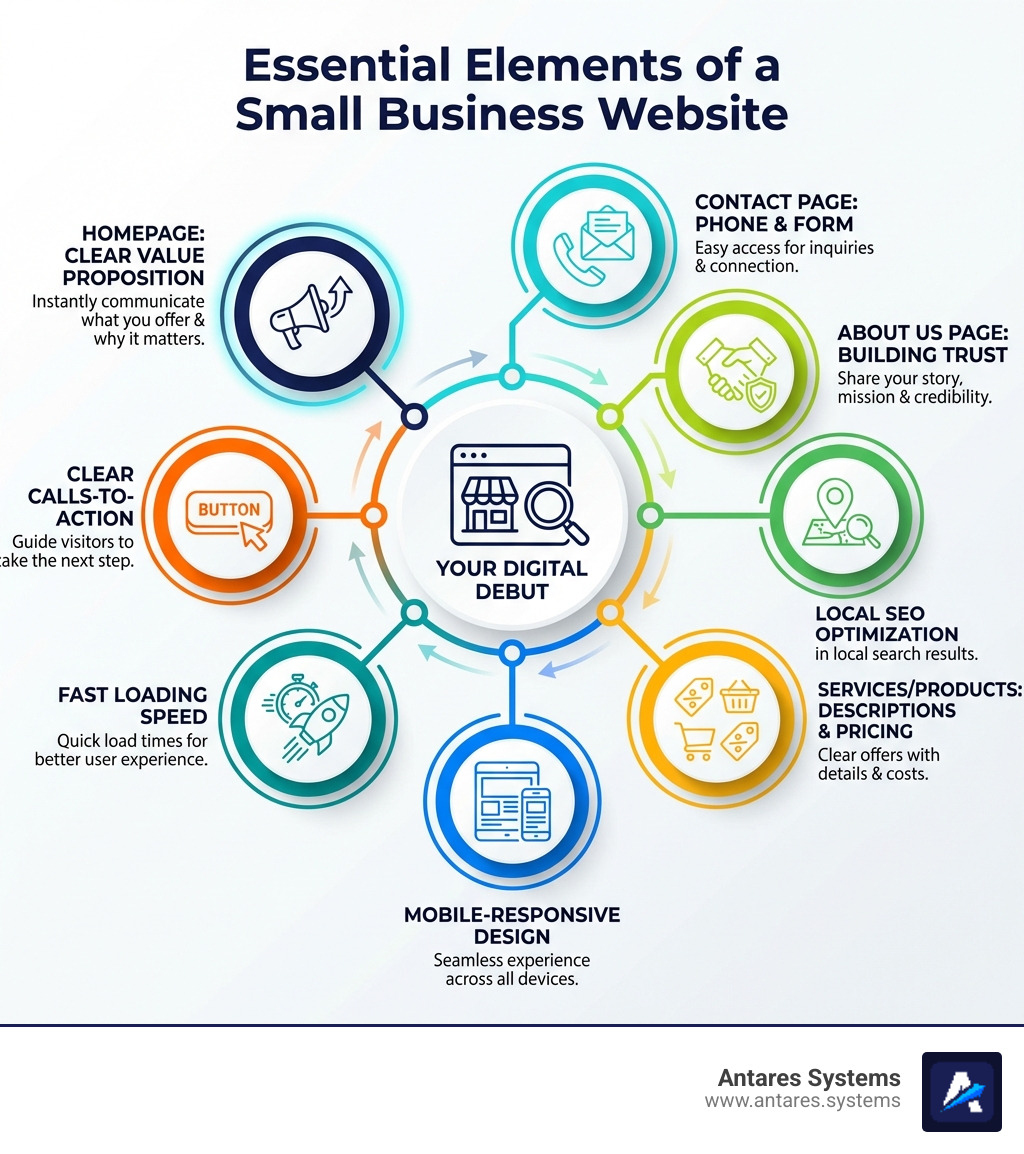
Every website for small business should include these core pages:
- Homepage: Your digital welcome mat. It must grab attention, explain what you do, and direct visitors to other key areas.
- About Us Page: Share your story, mission, and values to build trust and connect with your audience.
- Services/Products Page: Clearly showcase what you offer with detailed descriptions, quality images, and pricing. This is where you can detail services like web design in Dallas or local SEO for McAllen.
- Contact Us Page: Make it easy for customers to connect. Include your phone, email, address (for local businesses in Austin or Brownsville), and a contact form.
We also recommend adding a Blog to share expertise, an FAQ page to answer common questions, and a Testimonials page to build social proof. Planning these pages provides a solid framework for your site.
Building Trust and Visibility: How Your Website Lifts Your Brand
A well-designed website for small business is more than an online brochure; it's a powerful tool for building credibility and boosting visibility.
Credibility: The Digital Handshake
A clean, modern website conveys professionalism and shows you're invested in the customer experience. It's a platform for transparency, where you can share your mission and values. Featuring testimonials and case studies provides social proof, as 36% of consumers agree a website adds credibility.
Visibility: Being Found Where It Matters
With billions of daily Google searches, a website makes you findable. For local businesses in San Antonio, Houston, or Pharr, a site optimized for local search connects you with nearby customers. Your website also acts as a central hub for all digital marketing, converting traffic from social media and email campaigns into action.
We create Custom Website Design Crucial Small Business solutions that build both credibility and visibility.
The Findy Engine: SEO's Role in Website Visibility
A great website is useless if no one can find it. Search Engine Optimization (SEO) is the process of optimizing your site to rank higher in search results, making you visible to potential customers.
How SEO Works for Your Small Business Website:
- Keywords: Integrate terms your audience uses to find your services. For a business offering Local SEO Services in Houston, this means using phrases like "Houston SEO."
- Indexing & Structure: Ensure search engines can crawl and understand your site's content. This involves proper indexing, logical structure, and using keywords in metadata, headers, and URLs.
- Local SEO: This is vital for businesses in areas like Edinburg or Austin. Local SEO helps you appear in "near me" searches, connecting you with customers in your geographic area. We show businesses How to Do Local SEO for Small Businesses.
- Algorithm Adaptability: Search engine algorithms change constantly. A good SEO strategy adapts to these changes to maintain rankings.
SEO is an ongoing strategy, not a one-time fix. It gives your website for small business a competitive edge. Learn more about our SEO for Small Business solutions.
Digital Showroom: Showcasing Products and Services Effectively
Your website for small business is your 24/7 digital showroom. To make it effective, focus on creating an engaging and informative experience that drives action.
Here’s how to showcase your offerings:
- High-Quality Visuals: Use professional photos and videos to highlight your products' features or your services' results.
- Compelling Descriptions: Explain the value and benefits of what you offer. Focus on how you solve your customers' problems.
- Structured Presentation: Organize your offerings into logical categories with clear headings and an easy-to-steer menu.
- Detailed Service Pages: For service businesses, create dedicated pages for each offering. Explain the process, benefits, and what's included.
- Clear Calls to Action (CTAs): Tell visitors what to do next. Use buttons like "Request a Quote," "Schedule a Consultation," or "Add to Cart" to guide them through the sales process.
These elements transform your website from a static page into a dynamic sales tool.
Beyond Sales: Customer Service and Brand Control Through Your Website
A website for small business does more than drive sales; it's a vital tool for customer service and brand control.
Elevating Customer Service
Your website provides 24/7 support through FAQ pages and detailed service descriptions. It offers private support channels via contact forms and enables automated appointment booking with tools like Acuity Scheduling. This streamlines processes and improves the client experience.
Maintaining Brand Control
Unlike social media, your website is a space you completely own. You control the narrative, messaging, and visual presentation. It's the perfect place to build an email list for direct communication, bypassing algorithms that limit reach. A strong website is also central to proactive Reputation Management, allowing you to highlight positive feedback and manage your online image effectively.
Streamlining Success: Automating Sales and Generating Leads
A website for small business can automate key processes, generating leads and sales 24/7 so you can focus on your core operations.
Automating Sales Processes
Integrate tools for online scheduling, use forms to collect client information, and implement e-commerce for direct sales. You can also streamline payments with online invoicing, improving cash flow and saving administrative time.
Generating Leads Automatically
Use your site to build an email list with sign-up forms and valuable lead magnets. Integrate your forms with a CRM for automated follow-ups, ensuring no lead is missed. Your website can also host optimized landing pages for PPC campaigns, designed to convert ad clicks into customers.
By implementing these features, your website becomes a powerful engine for growth and efficiency.
The Great Debate: Choosing a Website Builder or Designer
When building your website for small business, you can use a DIY website builder or hire a professional. The right choice depends on your budget, time, and technical needs.
Website Builders: The DIY Approach
- Pros: Cost-effective, easy to use with drag-and-drop interfaces, and quick to launch.
- Cons: Limited customization, potential scalability issues, and basic SEO capabilities.
Professional Web Designers: The Bespoke Solution
- Pros: A fully Custom Website Design custom to your brand, a strategic approach to user experience, advanced functionality, and built-in SEO best practices.
- Cons: Higher upfront cost and longer development time.
You can also choose between a freelancer for personalized attention or an agency for a comprehensive team of experts. The best path depends on your goals. We offer a range of Web Design Services to fit your specific situation.
The Price Tag: Understanding Small Business Website Costs
The cost of a website for small business varies widely, much like the cost of a house. The price depends on complexity, customization, and who you hire.
Factors Influencing Cost:
- Complexity and Features: A basic informational site is the least expensive. Costs increase with e-commerce functionality, membership portals, custom calculators, or other advanced features.
- Customization Level: A template-based site is a low-cost option, while a fully custom design custom to your brand and conversion goals is a larger investment.
- Hiring Model: Costs differ between a DIY approach, a freelancer, or an agency. Agencies typically have higher costs but offer a comprehensive team of specialists. Our Web Design FAQ provides more detail.
- Designer's Experience: An experienced designer provides strategic, results-focused solutions at a higher rate than a beginner using pre-made themes.
Typical Cost Ranges:
- Basic Template Site:$500 - $2,500
- Custom Informational Site:$3,000 - $10,000+
- Complex Custom or E-commerce Site:$10,000 - $50,000+
Remember to budget for ongoing costs like domain registration, hosting, and maintenance. We provide transparent, customized quotes based on your specific goals.
Keeping It Fresh: Best Practices for Updating and Maintaining Your Website
Launching your website for small business is just the beginning. Consistent maintenance is crucial for performance, security, and relevance. Regular updates improve SEO, engage users, patch security holes, and maintain a professional brand image.
Best Practices for Maintenance:
- Content Refresh: Regularly add blog posts, update service pages, and ensure all business information is current. Fresh content is key for search engines to keep your site indexed by search engines.
- Technical Health: Routinely update your CMS and plugins, fix broken links, and run security scans to protect your site from threats.
- Performance Monitoring: Check your site's load speed and mobile responsiveness to ensure a good user experience.
- Analytics Review: Use analytics to track traffic and user behavior, then use that data to refine your content and SEO strategy.
A consistent maintenance plan keeps your website healthy and optimized for growth, following the 6 key steps that go into building a great small business website.
Digital Synergy: Integrating Social Media and Email Marketing
Your website for small business should be the hub of your digital marketing. Integrating it with social media and email marketing amplifies its reach and effectiveness.
Social Media Integration
Link your social profiles from your website and use your channels to share website content like blog posts and offers. This drives traffic back to your site. Add social sharing buttons to encourage visitors to share your content, and use paid social ads to send targeted traffic to your landing pages.
Email Marketing Integration
Use your website to build your email list with sign-up forms. Email provides a direct line to your audience, unlike social media's limited reach. Use email to promote website content, automate campaigns like welcome series, and gather customer feedback.
By connecting these channels, your website becomes a powerful magnet for attracting and nurturing customers.
The Digital Storefront: Essential Elements of E-commerce Setup
To sell products or services online, your website for small business needs an effective e-commerce setup.
Here are the essential elements:
- Platform Selection: Choose a reliable platform that supports secure, scalable online sales.
- Storefront Design: Create a visually appealing, easy-to-steer store that reflects your brand.
- Product Presentation: Use high-quality images, compelling descriptions, and logical categories.
- Secure Payment Processing: Integrate trusted payment gateways and use an SSL certificate (HTTPS) to protect customer data.
- Shipping and Fulfillment: Clearly define shipping options, costs, and delivery times.
- Taxes and Policies: Set up tax calculations and clearly state your return and privacy policies to build trust.
- Customer Accounts: Allow customers to create accounts for easy order tracking and repeat purchases.
- Marketing and SEO: Optimize product pages for search, integrate email for promotions, and use social media to drive traffic.
Starting with these elements provides a solid foundation for your online store.
The Data Detective: Using Analytics to Inform Strategy
A website for small business generates valuable data. Website analytics provide insights into visitor behavior and performance, telling you what's working and what isn't.
Key Metrics and Strategy
Track metrics like Website Traffic, Page Views, Bounce Rate, and especially Conversion Rate. This data helps you:
- Optimize Content: Identify which topics resonate with your audience and improve underperforming pages.
- Improve User Experience (UX): Find and fix pages where visitors drop off or struggle.
- Refine Marketing: See which channels drive the most valuable traffic and adjust your budget accordingly.
- Boost Sales: Identify and remove bottlenecks in your sales funnel to improve conversions.
We offer a Free Internet Business Audit Report to help you understand your online performance. By using analytics to inform your strategy, your website becomes a dynamic tool for growth.
All-in-One Wonders: The Advantages of Platforms like Squarespace and Weebly
For small businesses with limited technical resources, all-in-one website builders like Squarespace and Weebly are examples of popular options for creating a professional website for small business.
Key Advantages:
- Ease of Use: Intuitive drag-and-drop interfaces can make building a site possible without any coding skills.
- Professional Templates: Access to a wide array of mobile-responsive templates for various industries.
- Integrated Features: Many platforms include built-in tools for e-commerce, marketing, and even appointment booking.
- All-Inclusive: Hosting, security, and customer support are often bundled into one monthly plan.
While less customizable than a fully custom-coded site, this type of platform offers a practical balance of features, affordability, and ease of use to get a website for small business online quickly.
The Future is Now: How AI Tools Can Assist Your Website Journey
Artificial Intelligence (AI) is revolutionizing website creation and management. For a website for small business, AI tools can streamline processes, save time, and improve performance without requiring advanced technical skills.
How AI Can Help with Your Website:
- AI Website Builders: Quickly generate entire website layouts and content.
- Content Generation: Create blog post ideas, outlines, and product descriptions automatically.
- Design Assistance: Get suggestions for color palettes, layouts, and automatically optimized images.
- SEO Optimization: Use AI to analyze keywords and suggest on-page improvements. We leverage AI in our Local SEO AI Importance strategies.
- Customer Service: Integrate AI chatbots to provide 24/7 customer support.
- Analytics and Insights: Let AI process website data to identify trends and offer actionable recommendations.
- Automated Lead Capture: Our Smart Website Design uses AI to automate lead capture and follow-up sequences.
AI simplifies complex tasks, making advanced tools accessible to small business owners. Learn more about the Best AI Tools for Small Businesses and how they can empower your digital strategy.
Ready to Make Your Digital Debut?
A powerful website for small business is a strategic necessity for growth and credibility. It's the cornerstone of your digital future, enhancing visibility in markets like San Antonio and Houston while streamlining sales and customer service.
You've learned about essential pages, SEO, automation, and helpful tools. Now it's time to take action.
Whether you need San Antonio Website Design, Houston Website Design, Dallas Website Design, or specialized Local SEO Services McAllen TX, we're here to help.
Don't let your business remain invisible online. Let us craft an online presence that generates leads, increases conversions, and drives growth.
Connect with Antares Systems Today!