Unlock Your Potential: The Top SEO Tools for Small Business Success

Why Small Businesses Need the Right SEO Tools to Compete
SEO tools for small business are essential platforms that improve your website's visibility on search engines like Google. The right tools help you track rankings, find keywords, fix technical issues, and analyze competitors—all without needing to be an SEO expert.
Quick Answer: The Best SEO Tools for Small Businesses
Free Essential Tools (Start Here):
- Google Search Console - Monitor search performance and fix indexing issues.
- Google Analytics - Understand who visits your site and how they behave.
- Google Business Profile - Dominate local search results.
Paid Tools (When You're Ready to Scale):
- SEMrush or Ahrefs - All-in-one platforms for deep analysis.
- Screaming Frog - Technical SEO audits to find website issues.
- SE Ranking - Affordable rank tracking and local SEO monitoring.
Here's the reality: only 44% of small businesses use SEO. This gap is a massive opportunity. While competitors focus on social media, you can appear first on Google when a local customer searches for your services.
The problem isn't that SEO is too complex; it's that many owners feel overwhelmed. They invest in expensive software or chase perfect "SEO scores" that don't translate into customers. The truth is, you only need the right tools for your specific situation.
This guide cuts through the noise. We'll show you which tools matter, when free options are enough, and when it makes sense to invest in paid software. You'll learn how to use these tools to find customers, fix problems that hurt your rankings, and track what's working.
As an SEO Account Manager, I've seen how the right SEO tools for small business can transform online visibility. Let me walk you through what actually works.
Starting with the Essentials: Free SEO Tools Every Small Business Needs
If you're just starting with SEO, you don't need to spend any money. Begin with Google's free suite: Google Search Console, Google Analytics, and Google Business Profile. These platforms provide everything you need to understand your website's performance, visitor behavior, and local visibility.
Think of these tools as your SEO foundation. Master them before considering paid options. They provide website performance insights, clarify user behavior, and help you identify technical issues that could be hurting your rankings. For businesses in the Rio Grande Valley or major Texas cities like Houston and Dallas, these free SEO tools for small business are crucial for boosting local visibility.
Helpful Resources:
Understanding Your Website's Health with Google Search Console
Google Search Console is your direct line to Google, showing you how the search engine sees your site. Its performance reports reveal which keywords your site ranks for, how many clicks you get, and your average position. It also alerts you to indexing issues that keep pages out of search results, reports on mobile usability and Core Web Vitals(site speed), and warns you of any security issues.
Tracking Your Audience with Google Analytics
Google Analytics shows you how people interact with your site. You can see user demographics(age, location, interests) and traffic sources(where visitors come from). The popular pages report shows which content gets the most views, helping you understand audience needs. Most importantly, conversion tracking lets you measure actions like form submissions or phone calls, turning traffic data into business results. User engagement metrics like bounce rate tell you if your content is resonating with visitors.
Dominating Local Search with Google Business Profile
For any business with a service area, like those in Pharr or Mission, Google Business Profile is the most important free local SEO tool. It's the key to appearing in the local pack rankings —the map and three business listings at the top of local search results.
Customer reviews on your profile heavily influence both customers and your ranking. Responding to all reviews is crucial. Ensure your business information accuracy(Name, Address, Phone) is consistent everywhere online to avoid confusing Google. Finally, use the posting updates feature to share news and offers, keeping your profile fresh and engaging.
Further Reading:
Key Features to Look For in an SEO Tool
When choosing SEO tools for small business, it's easy to get overwhelmed. The best approach is to focus on tools that provide actionable insights without drowning you in data. You need tools that help you make better marketing decisions, not ones that require a computer science degree.
Here’s what actually matters:
-
Keyword Research: Can the tool find what customers are searching for? Does it help you identify terms you can realistically rank for?
-
Rank Tracking: You need to see if your efforts are working. A good tool monitors your search result positions for key terms over time.
-
Site Audits: These tools crawl your site like Google does, highlighting technical problems like broken links, slow pages, or duplicate content that hurt your rankings.
-
Competitor Analysis: The best tools let you see what's working for your competitors. What keywords are they ranking for? Where do they get traffic? This helps you find new opportunities.
-
Backlink Analysis: Links from other sites are votes of confidence. These tools show who links to you and your competitors, helping you spot opportunities to build authority.
-
User-Friendly Interface: A tool is useless if it's too complicated. Look for clear dashboards, plain-English explanations, and intuitive navigation.
-
Reporting Features: Good reports help you track progress and justify your SEO investment, showing improvements in traffic, rankings, and conversions.
-
Budget Considerations: Expensive doesn't always mean better. The right tool fits your budget while delivering the features you actually need. Start with free options and upgrade as your business grows.
Related Resource:
Does SEO Work for Small Businesses?
The Best SEO Tools for Small Business Needs
Now let's explore which SEO tools for small business deliver the best results. The secret isn't using every tool, but choosing the ones that solve your specific problems, whether you're in McAllen, Houston, or Miami.
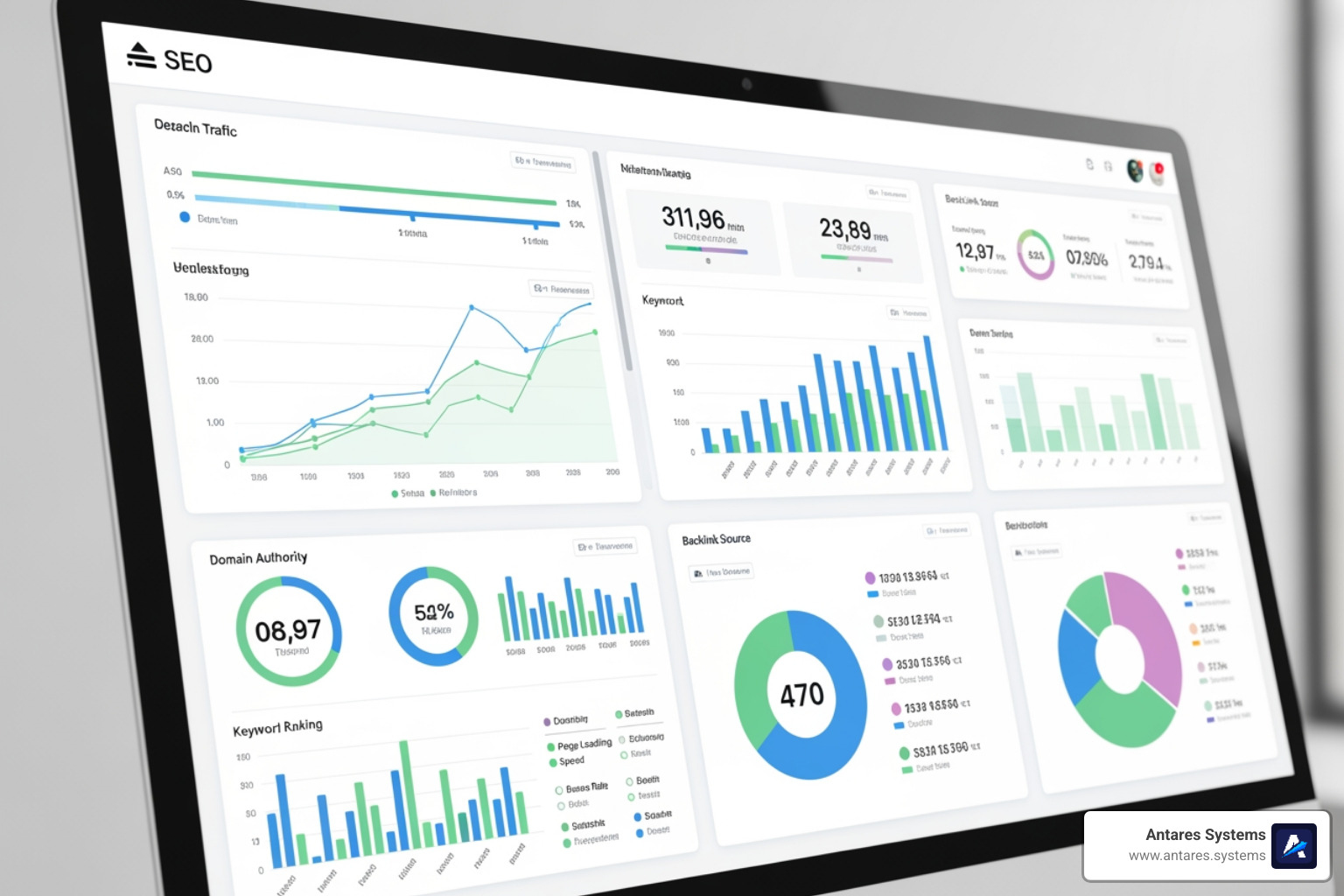
We'll cover five key categories: all-in-one platforms, content optimization, technical SEO, local SEO, and budget-friendly keyword research.
For Comprehensive Management: All-in-One SEO Platforms
All-in-one platforms are your SEO command center, combining keyword research, rank tracking, site audits, and competitor analysis. They are ideal when you've outgrown free tools and need efficiency. Key benefits include centralized data and reporting, automated keyword tracking, site health monitoring to catch technical issues, and competitor research to reveal their top keywords and backlinks. They also offer content strategy support to identify topic gaps. These platforms typically cost $100-$300 per month, an investment best made when you're in a competitive market or managing a complex site and have mastered the free tools first.
For Content and On-Page Optimization
Content optimization tools ensure your website copy attracts customers. They analyze top-ranking content to help you create something better. Features include SERP analysis to see what content formats Google prefers, AI writing assistants to help draft content, and topic coverage suggestions to ensure you address all relevant points. Readability analysis helps keep your content clear and user-friendly, while content briefs provide a detailed outline before you start writing. This takes the guesswork out of creating effective content.
For more detailed guidance on optimizing every element of your web pages, check out our Optimize Your Website: An On-Page SEO Guide.
For Technical SEO Audits
Technical SEO involves the behind-the-scenes issues that can kill your rankings. Audit tools act like a mechanic for your website. They perform website crawling to find problems like broken links, redirect chains, duplicate content, and pages invisible to Google. They also conduct site speed analysis, which is critical since slow websites frustrate users and hurt rankings. Screaming Frog SEO Spider is a popular tool for this; its free version crawls up to 500 URLs, which is enough for most small businesses. For speed issues specifically, the free Google PageSpeed Insights provides actionable recommendations.
Useful Tools:
For Local SEO Tools for Small Business
If you depend on local customers, these tools are non-negotiable. They help you dominate "near me" searches. Features include local rank tracking to see how you rank in different neighborhoods, and citation management to ensure your business name, address, and phone number (NAP) are consistent across all online directories. Review monitoring notifies you of new customer reviews so you can respond quickly. They also offer Google Business Profile optimization features to help you maintain an active and trustworthy profile. SE Ranking is a great value option, offering a comprehensive local marketing dashboard at an affordable price.
For more strategies to boost your local presence, dive into The Ultimate Guide to Growing Your Business with Local SEO.
For Budget-Friendly Keyword Research
Keyword research tells you what customers are typing into Google. You don't need expensive software to find great keywords. Focus on long-tail keywords(longer, specific phrases like "emergency plumber in Brownsville") that have less competition and attract ready-to-hire customers. It's also vital to understand user intent and find question-based keyword ideas. AnswerThePublic is a great free tool for finding questions people ask. Mangools (KWFinder) is a beginner-friendly paid option with a clean interface. Even the free Google Keyword Planner(part of Google Ads) provides reliable data and suggestions.
Recommended Tools:
Free vs. Paid: When to Upgrade Your SEO Toolkit
Deciding between free and paid SEO tools for small business depends on your goals, stage, and budget. Here's how to make the right choice.

Free tools like Google Search Console, Analytics, and Business Profile are incredibly powerful. They are professional-grade resources that can take you very far. However, they have data limitations, lack advanced features like in-depth competitor analysis, and offer minimal support.
Paid tools provide vast databases, sophisticated reporting, and time-saving automation. They offer a holistic view of your SEO performance and competitive landscape in one place, with dedicated support.
So, when should you upgrade? For most small businesses, especially those just starting in places like McAllen or Mission, free tools are more than sufficient. Master them first.
Invest in paid SEO tools for small business when you hit the limits of free tools. This often happens when:
- You're in a highly competitive market (like Houston or Dallas).
- You have dedicated time to leverage advanced features.
- Your business is growing, and the time saved by automation justifies the cost.
Always weigh the cost against the potential return. An affordable tool like SE Ranking can be a perfect stepping stone. The goal is to use tools that provide granular data and competitive intelligence to move from page two to page one.
My advice: Start simple. Master the free tools. When you're constrained by their limitations, not your knowledge, it's time to invest.
Related Resource:
Frequently Asked Questions about SEO Tools
We hear common questions from small business owners about SEO tools for small business. Let's address the most frequent ones.
What are the most essential SEO tools for a beginner?
For beginners, stick with Google's free suite: Google Search Console, Google Analytics, and Google Business Profile. These no-cost tools provide the foundational data you need. Search Console shows how Google sees your site, Analytics reveals visitor behavior, and Business Profile is your key to local search visibility. If you aren't using these effectively, you aren't ready for paid software. Master these basics first.
Are expensive all-in-one SEO platforms worth it for a small business?
It depends. For most new businesses, platforms like SEMrush or Ahrefs are overkill. They are powerful but have a steep learning curve and high cost. We recommend mastering the free tools first. Paid platforms become a worthwhile investment when you're in a highly competitive market (like legal services in Houston), when the time-saving automation justifies the cost, or when you've genuinely outgrown the free options. The ROI comes from making faster, smarter decisions.
How can I use SEO tools to understand my competitors?
Competitive intelligence is a smart strategic move, and SEO tools for small business make it accessible. Use competitor analysis features to:
- Find their ranking keywords: This reveals keyword opportunities you may have missed.
- Identify their backlink sources: Uncover potential link-building opportunities, like local directories or industry blogs that link to them but not you.
- Analyze their top-performing content: Understand what resonates with your shared audience. Don't copy—create something even better and more comprehensive.
Conclusion: Choosing the Right Tools for Sustainable Growth
Navigating SEO tools for small business doesn't have to be complicated. You don't need every tool; you need a smart approach that matches your business's current stage and future goals.
Start with Google's free suite— Google Search Console, Google Analytics, and Google Business Profile. These tools provide everything you need to compete online without spending a dime. As your business grows and your needs become more complex, you can make a strategic investment in paid tools for deeper analysis or content optimization.
The key is to make investments based on your unique needs, not to chase perfect "SEO scores." Focus on understanding the why behind the data. The SEO landscape is always changing, so a commitment to continuous learning is essential for long-term success.
However, running a business is a full-time job. If you're spending more time wrestling with SEO tools than serving customers, it might be time for a different approach. That's why we built Antares Systems.
We specialize in AI-powered marketing solutions that take the complexity off your plate. Our team handles everything from Local SEO and Google Business Profile optimization to content creation and reputation management. We help small service-based businesses in home services, legal, and construction generate more leads and achieve sustainable growth without the headache.
If you'd rather focus on what you do best, explore our Local SEO Services and let us help you open up your full online potential. Sometimes the smartest SEO tools for small business investment isn't software—it's a partnership.