Beyond the Template: The Power of Custom Website Development
Why Your Business Needs More Than a One-Size-Fits-All Website
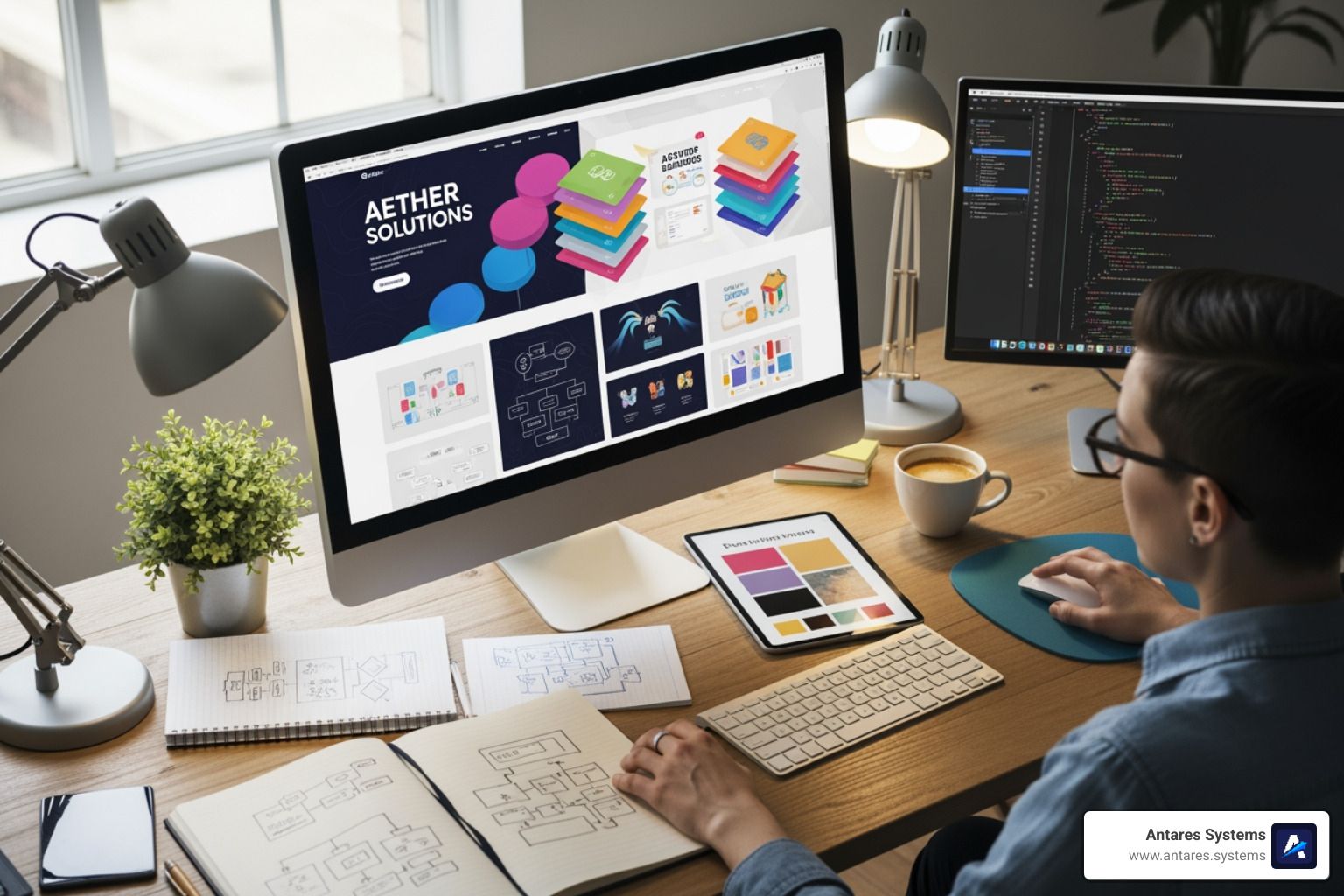
Custom website development is the process of building a website from scratch, custom to your business goals, brand identity, and customer needs. Unlike using pre-made templates, every feature and design element is created just for you.
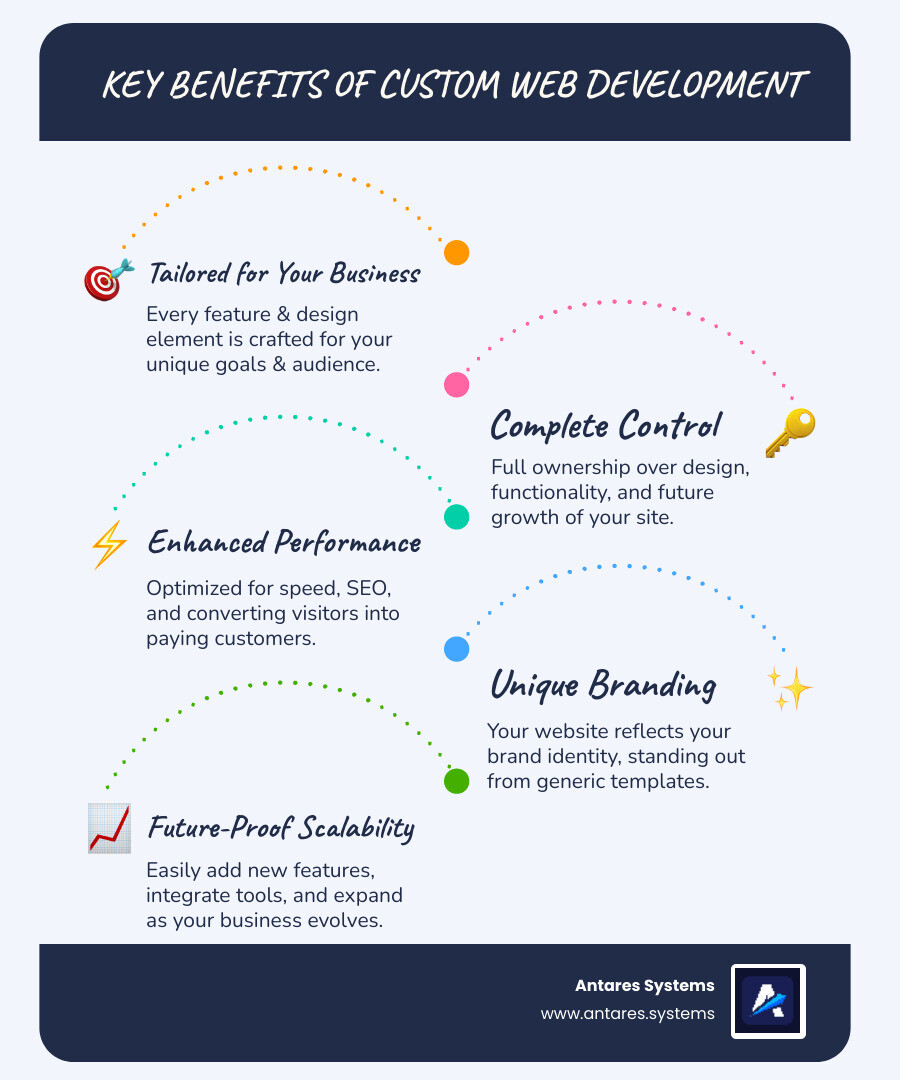
This approach gives you complete control, better performance, and a unique brand identity that stands out. It also ensures your site is scalable and ready to grow as your business evolves.
A cookie-cutter template won't cut it. Many businesses are moving to custom solutions because they see higher conversion rates and stronger returns on their investment. A custom website is built to perform—optimized for speed, search engines, and turning visitors into customers.
I'm Angela D., and my career in SEO and digital growth has shown me how custom website development drives measurable results. By providing the flexibility and performance businesses need, custom sites achieve better rankings and higher conversions.
If you want a deeper technical dive into how the web works under the hood, resources like World Wide Web Consortium can help you understand the standards that guide modern web design.
What is Custom Website Development?
At its core, custom website development means creating a unique website from the ground up. It’s designed to meet your specific business goals, reflect your brand, and exceed user expectations. Unlike off-the-shelf templates, custom development gives you complete control over every aspect of your site, from its look and feel to its underlying functionality.
Think of it like building a custom home versus buying a pre-built one. A template is a pre-built house; it's functional, but you're limited by its existing structure. Custom development is like hiring an architect to build your dream home. Every detail is planned and executed to fit your precise needs, creating a powerful tool engineered to generate leads, sell products, or provide a unique online service.
The Unbeatable Advantages: Why Custom Beats Templates
While templates offer a quick start, custom website development delivers long-term value. Here's why custom is often smarter:
1. Unique Design and User Experience (UX) Your website reflects your brand's identity, creating a memorable and intuitive user experience. You get a digital space that feels distinctly yours and resonates with your target audience.
2. Custom Functionality You get the exact features your business needs without unnecessary extras. Whether it's a complex booking system, membership portal, or CRM integrations, functionality directly supports your operations.
3. Scalability and Flexibility Custom websites grow with you. As your business evolves, your site adapts to new features and technologies without requiring a complete overhaul.
4. Strong SEO Potential Custom websites can be optimized for search engines from the ground up with clean code, fast load speeds, and optimal site structure, making it easier to compete for rankings.
5. Improved Security Custom security measures can be implemented for your site's specific needs, reducing vulnerabilities commonly found in widely used templates.
6. Better Conversion Rates By focusing on intuitive user journeys and clear calls to action, custom websites are designed to convert visitors into customers.
7. Long-Term ROI Although initial investment may be higher, businesses investing in custom development often see stronger long-term returns through superior performance, unique branding, and custom functionality.
The Journey of Creation: Key Stages in Custom Website Development
Building a custom website is a structured, collaborative process. Here are the key stages:
1. Findy and Planning This foundational stage involves understanding your business, goals, audience, and competition. We define project scope and strategy in a planning document that serves as a blueprint.
2. Wireframing and Design (UI/UX) We create wireframes and visual mockups to design the user interface and experience. This stage lets you see the site's look and feel before coding begins.
3. Development Developers translate approved designs into clean, responsive code. This includes front-end (what users see) and back-end development (server-side logic), plus third-party integrations.
4. Testing and Quality Assurance Before launch, the website is tested for functionality, usability, performance, and security across devices and browsers.
5. Deployment and Launch Once approved, we launch your website. This involves configuring servers, connecting your domain, and ensuring a smooth transition.
6. Post-Launch Support and Maintenance Support continues after launch with updates, security monitoring, backups, and performance optimization to keep your website competitive.
Under the Hood: Technologies Powering Custom Websites
Custom website development uses a focused set of technologies to build robust, high-performing websites. The tools we use depend on your project's specific needs.
1. Front-End Technologies (The User-Facing Side)
- HTML, CSS, and JavaScript: These are the core building blocks. HTML structures the content, CSS styles it, and JavaScript adds interactivity and dynamic features.
- Front-End Frameworks (such as React, Angular, or Vue.js): These libraries and frameworks help build complex, modern user interfaces, especially for web applications that need rich interaction.
2. Back-End Technologies (The Server-Side Engine)
- Server-Side Languages (such as PHP, Python, or Node.js): These languages handle the server logic, database interactions, and other behind-the-scenes operations.
- Databases (such as MySQL, PostgreSQL, or MongoDB): Databases store and manage your website's data, from user information to product catalogs.
3. Content Management Systems (CMS) and E-commerce Platforms We can build from scratch or heavily customize established platforms to create a custom solution:
- WordPress: Custom themes and plugins can turn WordPress into a unique and powerful tool suited to your needs.
- Shopify and WooCommerce: For e-commerce, we can develop custom solutions on these platforms to improve functionality, streamline sales, and create a unique shopping experience.
4. APIs and Integrations APIs (Application Programming Interfaces) let your website communicate with other software, such as CRMs, payment gateways, and marketing automation tools. This creates seamless workflows and extends your site's functionality.
Finding Your Digital Partner: Choosing the Right Custom Website Development Agency or Freelancer
Selecting the right partner is crucial for your project's success. Here’s what to look for:
1. Experience and Portfolio Review their past projects to ensure they have a proven track record of high-quality work. Look for examples of websites they've built for similar businesses to confirm their style and capabilities align with your needs.
2. Technical Skills Ensure they are proficient in the necessary front-end and back-end technologies. An in-house team often leads to better communication and accountability.
3. Communication and Collaboration A good partner communicates clearly, listens to your needs, and provides regular updates throughout the project.
4. Comprehensive Support Look for a partner who offers ongoing support and maintenance after launch to keep your site secure and performing optimally.
5. Transparency They should provide a detailed proposal outlining the scope, timeline, and costs, with no hidden fees.
6. Reviews and Testimonials Check client reviews to gauge their professionalism, reliability, and the quality of their work.
Freelancer vs. Agency
- Freelancers can be cost-effective and offer personalized attention but may have limited capacity.
- Agencies typically have a diverse team of specialists (designers, developers, SEO experts) who can handle complex projects and offer comprehensive services like local SEO and PPC management.
At Antares Systems, we offer the dedicated attention of a specialized team combined with the comprehensive services of a full-service digital marketing agency, serving businesses across Texas.
The Investment: Costs Associated with Custom Website Development
"How much does a custom website cost?" The answer varies because it is custom to your unique needs. Like a custom-built home, the cost depends on the complexity, features, and design.
Here are key factors that influence the price:
1. Complexity and Size
- Simple Informational Sites: A professional brochure-style site with a few pages and basic forms might range from $2,000 to $5,000.
- More Advanced Sites: Websites with additional functionality like online payments, simple e-commerce catalogs, or member-only sections typically start higher and increase with complexity.
2. Custom Features Every unique feature—such as custom calculators, user accounts, payment gateways, or advanced search—adds to the development time and cost. This also includes needs like CRM integration to streamline your sales process.
3. Design and UX/UI Complexity A highly unique, sophisticated design with extensive user experience work will cost more than a simpler, clean layout.
4. Content and Branding Professional copywriting, photography, or video production will add to the budget. Branding and logo redesign services can also increase rates.
5. Ongoing Services Remember to budget for post-launch support, maintenance, hosting, and ongoing SEO, which are typically separate from the initial development cost.
Thinking of custom website development as a strategic investment is important. A professional, custom-built site can generate leads, convert customers, and provide a return on investment that makes it more valuable than cheaper, limiting alternatives.
Real-World Impact: Examples of Custom Website Development Projects
Custom website development creates purpose-built solutions that support real business results. Here are some examples of how it makes a difference:
1. E-commerce Platforms with Unique Functionality Instead of standard templates, a custom e-commerce solution can include unique product builders, advanced filtering, or personalized recommendation features. For example, we helped local restaurants like Pizza Xpress and Brick Fire Pizza with custom website designs and online ordering systems to manage orders efficiently.
2. Membership Portals and Online Communities For businesses needing gated content or subscription models, custom development allows for secure login systems, custom user dashboards, and personalized content delivery.
3. Service Booking and Scheduling Systems Service-based businesses can benefit from bespoke booking tools that match their unique operations. A mobile grooming service like Kireys Mobile Grooming, for instance, can use a custom system for streamlined appointment management.
4. Industry-Specific Web Applications Many industries have needs that off-the-shelf solutions cannot meet. A construction company like Brito Construction might use a custom portal for project management and client sharing. Similarly, a home services business like Tx Tidy Cans can have a site with custom service request forms and customer review features.
5. Data-Driven Search Engines and Directories Custom development can create specialized search tools or business directories for niche markets, using structured databases to help users find specific information quickly.
These examples show that custom development is about building digital tools that support operations and growth, not just digital brochures.
Boosting Visibility: How Custom Development Lifts SEO
High search engine visibility is crucial, and custom website development provides control over the factors that influence SEO success.
1. Clean Code and Optimal Site Structure Custom development allows for clean, semantic code without the bloat often found in generic templates. This makes it easier for search engine crawlers to understand and index your site's content, which is a key part of any on-page SEO guide to improving rankings.
2. Fast Load Speeds Page speed is an important ranking and user experience factor. Custom sites can be built for performance by minimizing unnecessary scripts and optimizing code. Faster sites help reduce bounce rates and align with Google's Core Web Vitals and overall visibility.
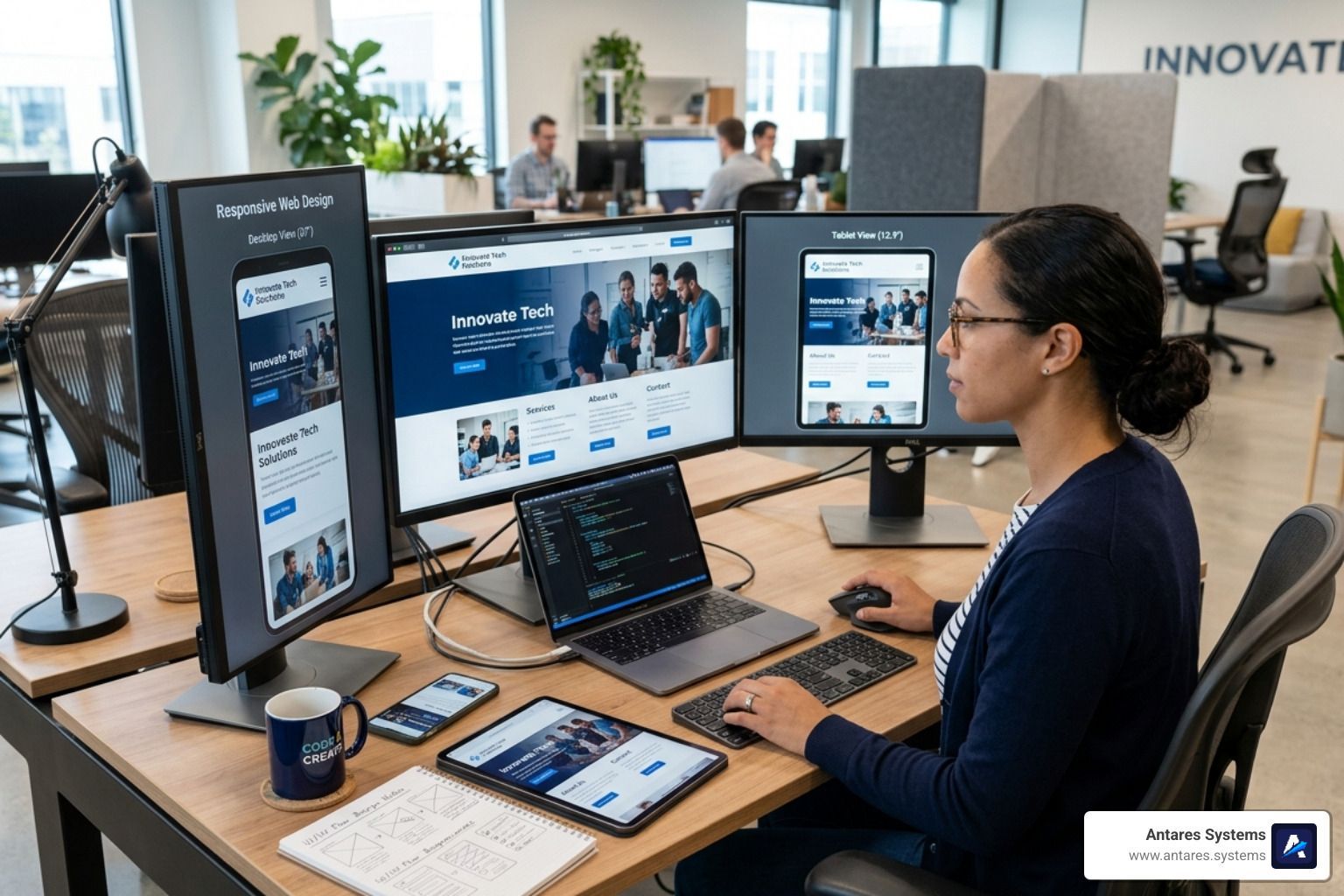
3. Mobile-Friendliness and Responsiveness With mobile-first indexing, a responsive design is essential. Custom development ensures your website is optimized for all devices, providing a consistent experience that supports strong search performance from day one.
4. Custom Metadata and Content Optimization Custom builds give you granular control over metadata, including title tags, meta descriptions, and schema markup. This allows for precise keyword targeting and helps search engines accurately match your site to user queries, which can improve click-through rates and rankings.
5. Improved Security A secure website (HTTPS) supports user trust. Custom development makes it possible to implement strong security practices that help protect your site and avoid potential penalties from security-related issues.
For a neutral overview of how search engines evaluate pages, you can review the basic concepts in Google Search Central documentation.
Beyond Launch: Support and Maintenance for Your Custom Site
Launching your custom website is just the beginning. Ongoing support and maintenance are critical to ensure your digital asset remains secure, performs optimally, and adapts to evolving technologies.
Comprehensive support and maintenance typically include:
1. Software Updates and Patches We keep your website's underlying technologies (CMS, frameworks, plugins) up-to-date to leverage new features, improve performance, and patch security vulnerabilities.
2. Security Monitoring We provide proactive security monitoring, apply necessary patches, and watch for suspicious activity to safeguard your website and customer data from emerging threats.
3. Performance Optimization We conduct regular performance audits, optimize databases, and manage server resources to ensure your site remains fast and responsive, providing a smooth user experience.
4. Regular Backups We implement automated, secure backup routines to ensure a recent copy of your entire website is always available for quick restoration in case of data loss.
5. Bug Fixing and Troubleshooting We provide prompt support to identify and resolve any technical glitches, ensuring your website remains fully functional for your users.
6. Content Updates and Management While our CMS solutions are user-friendly, we can also assist with content updates and structural changes as part of a maintenance plan to keep your site fresh and relevant.
7. Technical Support and Consultation We offer readily available technical support and ongoing consultation to help you steer your digital presence and plan for future growth.
Achieving Business Goals: Custom Development as a Strategic Tool
A custom website development project is a strategic investment designed to support your business objectives. For businesses across Texas and the Rio Grande Valley, a tailor-made online presence can be a key growth driver.
1. Lead Generation Custom websites can be engineered for lead capture with advanced forms, personalized calls to action, and integrated CRM systems. Landing pages can be designed for conversion, with a clear path for every visitor to become a lead, often supported by follow-up automation.
2. Sales and Revenue Growth For e-commerce, custom development allows for optimized checkout processes and personalized shopping experiences that reduce friction and can increase sales. Features like product configurators can also support higher average order values.
3. Brand Building and Differentiation A custom site gives you a unique, professional first impression aligned with your brand identity. It allows you to tell your story in a way that stands out, conveying trust and expertise through thoughtful design and content presentation.
4. Improved Customer Engagement Features like personalized user dashboards, interactive tools, and customer support portals can be built to encourage deeper engagement, repeat visits, and loyalty.
5. Operational Efficiency Custom websites can integrate with your internal systems (CRM, booking software, or other tools) to automate tasks, streamline workflows, and reduce manual effort, freeing your team to focus on core activities.
At Antares Systems, we build AI-informed, custom websites as powerful marketing tools, designed to capture leads, increase conversions, and help your business grow.
Custom Web vs. Custom Software Development: Understanding the Distinction
While often used interchangeably, custom website development and custom software development are not quite the same.
Custom Website Development
- Focus: Creating a public-facing online presence accessible via web browsers. The primary goal is typically marketing, sales, or information delivery.
- Functionality: Centers on web-specific features like content management, e-commerce, blogs, and lead generation forms.
- Examples: A company's marketing website, an online store, or a news portal.
Custom Software Development
- Focus: Creating bespoke applications to solve specific business problems or automate internal processes. These can be web-based, desktop, or mobile applications.
- Functionality: Often involves more complex business logic, such as custom CRM systems, inventory management tools, or specialized data processing applications.
- Examples: A proprietary inventory system for a warehouse or an internal project management tool.
The Overlap The line can blur, as a complex custom website may incorporate software-like features. The key difference lies in the primary purpose—public-facing marketing versus internal operational efficiency.
At Antares Systems, we focus on custom website development, often integrating with existing software to create a cohesive digital ecosystem for our clients.
Future-Proofing Your Business: Scalability and Growth
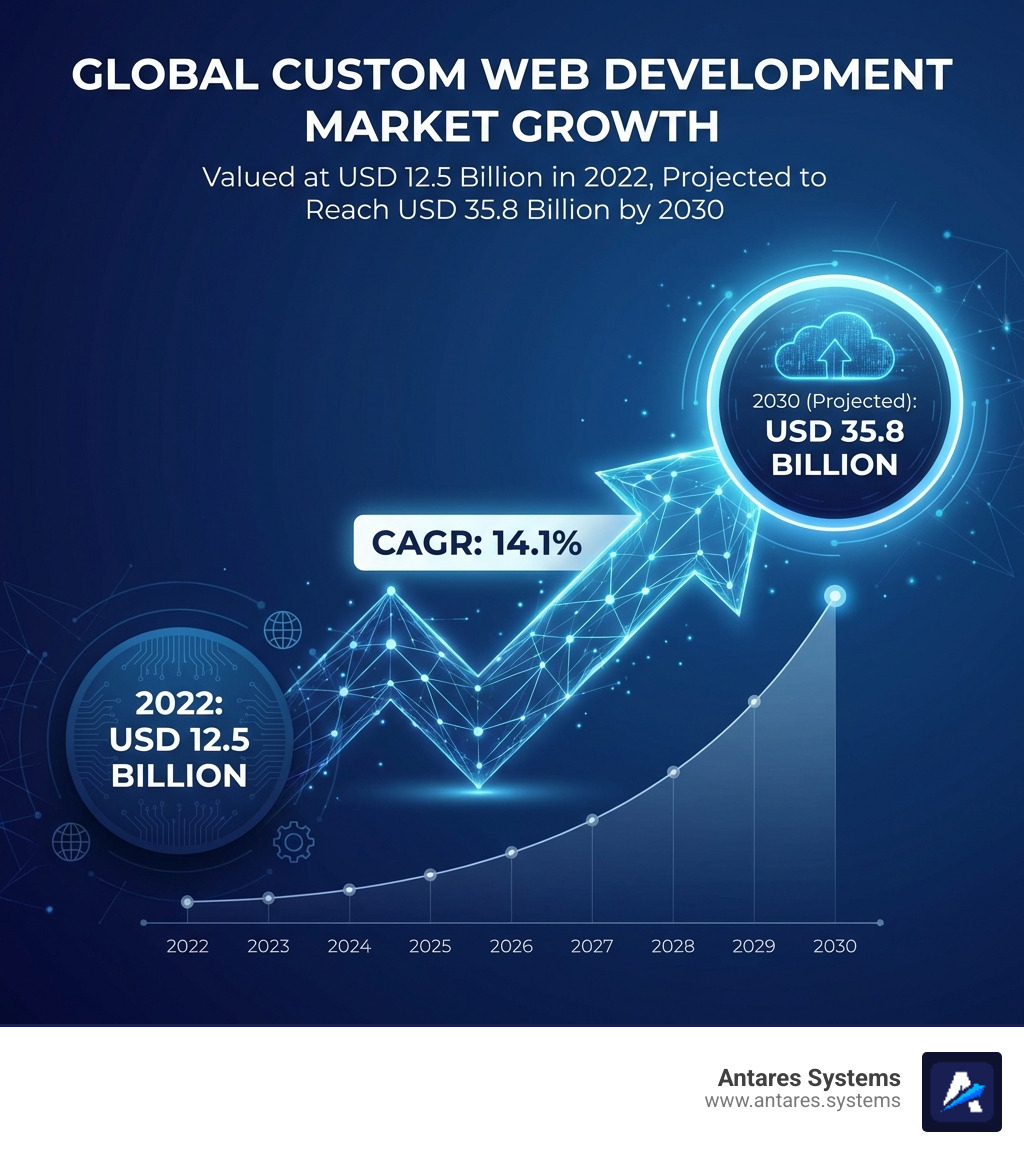
One of the strongest reasons to choose custom website development is its scalability. Unlike restrictive templates, a custom-built website is designed to evolve with your company.
1. Flexible Architecture Custom websites can be built on a modular architecture, allowing new features and functionalities to be added without disrupting the entire system. Your website can adapt as you add services or expand into new markets.
2. Integration Capabilities As your business grows, your tech stack will likely expand. Custom development allows for integration with third-party tools, such as a new CRM or marketing automation platform, helping your website remain the central hub of your digital operations.
3. Performance Under Load Custom websites can be optimized to handle increased traffic without slowing down. With efficient code and appropriate hosting configuration, your site can remain fast and stable as your audience grows.
4. Adaptability to New Technologies The digital world changes quickly. A custom site gives you the flexibility to incorporate emerging technologies like AI-driven features or advanced analytics, helping your business stay competitive.
5. Data Ownership and Control With a custom website, you retain full ownership and control over your data and intellectual property. This provides more autonomy than many closed, proprietary platforms.
Investing in custom development means building a digital foundation that is strong for today and adaptable for tomorrow.
Laying the Foundation: Essential Elements to Consider When Planning a Custom Website Project
Careful planning is the key to a successful custom website development project. A clear strategy saves time, money, and headaches. Here are essential elements to consider:
1. Define Your Business Goals Clarify what you want your website to achieve. Goals such as lead generation, online sales, or brand awareness will guide every design and development decision.
2. Understand Your Target Audience Know who you are trying to reach. Understanding your audience's demographics, behaviors, and pain points helps shape the design, content, and functionality.
3. Outline Key Features and Functionality List the capabilities your website needs, from basic forms to more complex features like membership areas or quote request tools. Prioritize this list to keep the scope and budget manageable.
4. Content Strategy Plan your website's content, including text, images, and videos. A strong content plan, such as a blog, can be crucial for local SEO and establishing industry authority.
5. Budget Allocation Set a realistic budget that includes development and design, as well as hosting, third-party tools, and ongoing maintenance.
6. Timeline and Milestones Create clear, achievable timelines for each phase of the project so it stays on track and allows for regular progress reviews.
7. Brand Guidelines Provide existing brand guidelines, logos, and color palettes to ensure the website's design is consistent with your identity.
8. Integration Needs Identify any external systems your website needs to connect with, such as a CRM, email marketing platform, or payment gateway.
Addressing these elements upfront helps create a practical blueprint for a project built with purpose.
Crafting Experiences: UX/UI Design in Custom Website Development
In custom website development, User Experience (UX) and User Interface (UI) design determine how effective your website will be. The goal is to create a digital space that is both visually appealing and easy to use.
1. User Experience (UX) Design: The "Feel" UX focuses on the overall experience a user has while interacting with your site. Good UX ensures intuitive navigation and efficient workflows, making it easy for users to accomplish their goals. In custom development, research and user journey mapping are used to build a site that responds to your audience's needs and supports trust.
2. User Interface (UI) Design: The "Look" UI is the aesthetic and interactive side of your website—the buttons, colors, typography, and layout. Strong UI reinforces your brand, guides the user's attention with clear visual hierarchy, and ensures the design works well across devices. In custom development, every visual element is designed to align with your brand and support the user journey.
The Synergy in Custom Development Custom development allows UX and UI to be planned together, so form and function support each other. The result is a website that not only looks polished but also performs well in terms of engagement and conversions.
If you want a neutral overview of UX principles, the Nielsen Norman Group maintains a widely cited definition of user experience and related best practices.
E-commerce Excellence: Advantages of Custom Development for E-commerce Businesses
For online retailers, custom website development can provide an edge over generic, off-the-shelf solutions. It allows you to maximize sales, streamline operations, and offer a unique shopping experience.
1. Unique Brand Experience A custom e-commerce site allows for a distinctive design that reflects your brand's personality and sets you apart, creating a more memorable shopping experience.
2. Custom Product Presentation You can display products exactly how you want with custom product pages, useful filtering options, and interactive product configurators that help customers make informed decisions.
3. Seamless Integrations You can integrate with the payment providers, shipping carriers, or tax services that fit your business. This flexibility can help reduce checkout abandonment and build customer trust.
4. Optimized Conversion Funnels Every step of the customer journey can be designed and tested to support more sales. A custom approach lets you refine navigation, product findy, and checkout flows over time.
5. Scalability for Growth A custom platform can be built to handle higher traffic and growing product catalogs without sacrificing speed, so your store performs well even during busy seasons.
6. Integration with Business Systems You can connect your e-commerce platform directly with inventory management, CRM, or accounting software to streamline operations and reduce manual work.
7. Improved Security Custom security practices can be implemented to help protect sensitive customer data and payment information, which supports trust and long-term customer relationships.
Conclusion: Release Your Business's Full Potential with Custom Web Development
In today's digital landscape, a generic online presence is rarely enough. Custom website development offers a more powerful approach, giving your business a digital asset that is built around your goals.
Custom development delivers:
- A Unique Brand Identity that sets you apart
- Precision Functionality built for your specific needs
- Strategic Scalability that grows with your business
- SEO-Friendly Foundations to attract more organic traffic
- Better Conversions and Long-Term ROI
At Antares Systems, we specialize in creating custom web solutions for local businesses across Texas and the Rio Grande Valley, empowering them with the digital tools they need to grow.
Ready to build a website that reflects your vision and supports your business?
Let's Lift Your Online Presence
- Explore our Website Design Services
- Learn about our Local SEO Services
- Contact us for a personalized consultation: Contact
Additional Resources from Antares Systems:
- Custom Website Development
- WordPress Website Design Services
- Building a Website: What Costs Are Involved?