
Winning the Local Game: Essential Local SEO Strategies
Why Local Search Engine Optimization Matters for Your Business
Local search engine optimization is the process of improving your business's visibility in location-based search results—like Google Maps, the "local pack" (those three business listings at the top), and organic search results when customers search for services near them.
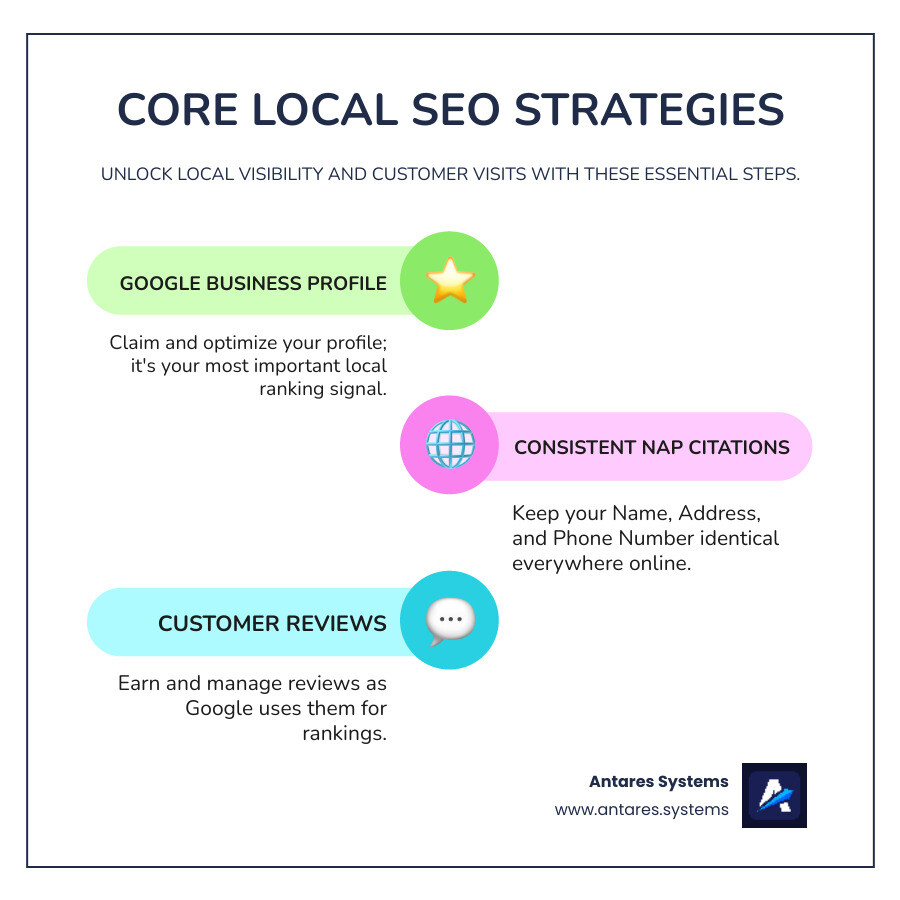
Quick Answer: Core Local SEO Strategies
- Claim and optimize your Google Business Profile- Your most important local ranking signal
- Build consistent NAP citations- Keep your Name, Address, and Phone Number identical everywhere online
- Earn and manage customer reviews- Google uses review quality, quantity, and recency for rankings
- Add location keywords to your website- Include city names in titles, headers, and content naturally
- Get local backlinks- Connect with other local businesses and community organizations
- Track your map pack rankings- Monitor visibility in your service area
If you're reading this, you're probably tired of watching competitors show up on Google while your phone stays quiet. You've likely spent money on marketing that didn't deliver results. Maybe you're not even sure where you rank when someone searches for your services in the Rio Grande Valley.
Here's the truth: 76% of consumers who search for "near me" visit a business within a day. That means every hour your business isn't visible in local search, you're losing customers to competitors who are.
Local SEO isn't mysterious or complicated—it's a series of concrete steps that work together. You don't need to understand every technical detail. You just need to know what matters and do those things consistently.
The biggest opportunity? Your competition is limited by geography. You're not fighting businesses across the country. You're competing with other local companies, many of which still haven't figured this out.
I'm Angela D., and I've helped businesses strengthen their online presence through effective SEO campaigns and content optimization. In my work with local search engine optimization, I've seen how the right strategies can transform a business's lead flow. Let me walk you through exactly what works.
Understanding Local SEO: More Than Just General SEO
What is Local SEO and How Does it Differ from General SEO?
At its core, local search engine optimization is about improving your business's visibility for searchers in a specific geographic area. Think of it this way: general SEO aims for national or even global visibility, targeting a broad audience. Local SEO, on the other hand, is like putting up a digital billboard right outside your physical storefront in McAllen, Houston, or San Antonio, ensuring that people nearby who need your services can find you.
When someone searches for "plumbers near me" or "best Italian restaurant in Austin," Google recognizes this local intent. Instead of showing results from across the country, it prioritizes businesses that are physically close to the searcher or relevant to the specified location. This is where local search engine optimization shines.
The key difference lies in the signals Google uses. While general SEO focuses on factors like backlinks, website authority, and broad keyword relevance, local SEO adds critical geographic signals. These include your Google Business Profile, local citations, online reviews, and location-specific website content.
Why is Local SEO Important for Businesses?
For local businesses, local search engine optimization isn't just important; it's essential for survival and growth. Our agency, Antares Systems, works with service-based businesses in the Rio Grande Valley, Dallas, and Miami. For these companies—from home services to legal firms—most customers come from their immediate service area.
Consider these compelling statistics:
- 76% of consumers who search for "near me" visit a business within a day. This highlights the high intent and urgency behind local searches. People aren't just browsing; they're ready to act.
- Most local searches happen on smartphones, often when people need immediate solutions. This means your business needs to be easily findable and accessible on mobile devices.
- Google's search market share stands at an astounding 84.69% in 2023. If you're not visible on Google, you're missing out on the vast majority of potential customers.
Local search engine optimization helps us bridge the gap between online finding and offline action (or phone calls for service-area businesses). It's about ensuring that when a potential customer in Pharr needs your service, your business is the first one they see.
Decoding Google's Local Search Algorithm
What Are the Main Factors That Influence Local Search Rankings?
Google's local search algorithm is a bit of a secret sauce, but they've been quite transparent about the three main ingredients: Relevance, Distance, and Prominence. These three factors determine your ranking in local search results, including the coveted "Map Pack."
Relevance:
- This refers to how well your Google Business Profile matches what someone is searching for. If a customer searches for "auto repair McAllen," and your business is an auto repair shop with that term in its description and services, Google sees you as highly relevant.
- Businesses with complete and accurate information are more likely to show up in relevant local search results.
Distance:
- Google takes into account how far away each potential search result is from the user's location (or the location specified in the search, like "plumber Houston").
- This is a non-negotiable factor. You can't change your physical distance, but you can ensure Google accurately knows your location.
Prominence:
- This refers to how well-known or reputable your business is. It's influenced by a combination of factors:
- Online reviews: The quantity, quality, and recency of reviews.
- Online citations: How often your business is mentioned across the web.
- Website authority: The strength and relevance of your website, including backlinks.
- Offline reputation: How well-known your business is in the real world (though Google primarily measures this through online signals).
How Does Google Determine Local Search Results (e.g., the Map Pack)?
When Google detects that a search has local intent, it uses these three factors—Relevance, Distance, and Prominence—to determine which businesses to show. Often, the most visible local results appear in the "Map Pack" (also known as the "3-pack" or "local pack").
The Map Pack is a prominent feature at the top of the search results page, displaying a map snippet with three business listings. This is prime real estate for any local business. When people search for a local business or service, Google often shows a map with three business listings at the top of the results (the “map pack” or “local pack”).
Our Google Business Profile is the major source for most of the data used in map pack rankings. Google uses all the information in your profile to determine your ranking in local searches. This is why optimizing it is not just a suggestion, but a critical step for your local search engine optimization strategy.
Your Digital Storefront: Google Business Profile
What is a Google Business Profile and Why is it Crucial for Local SEO?
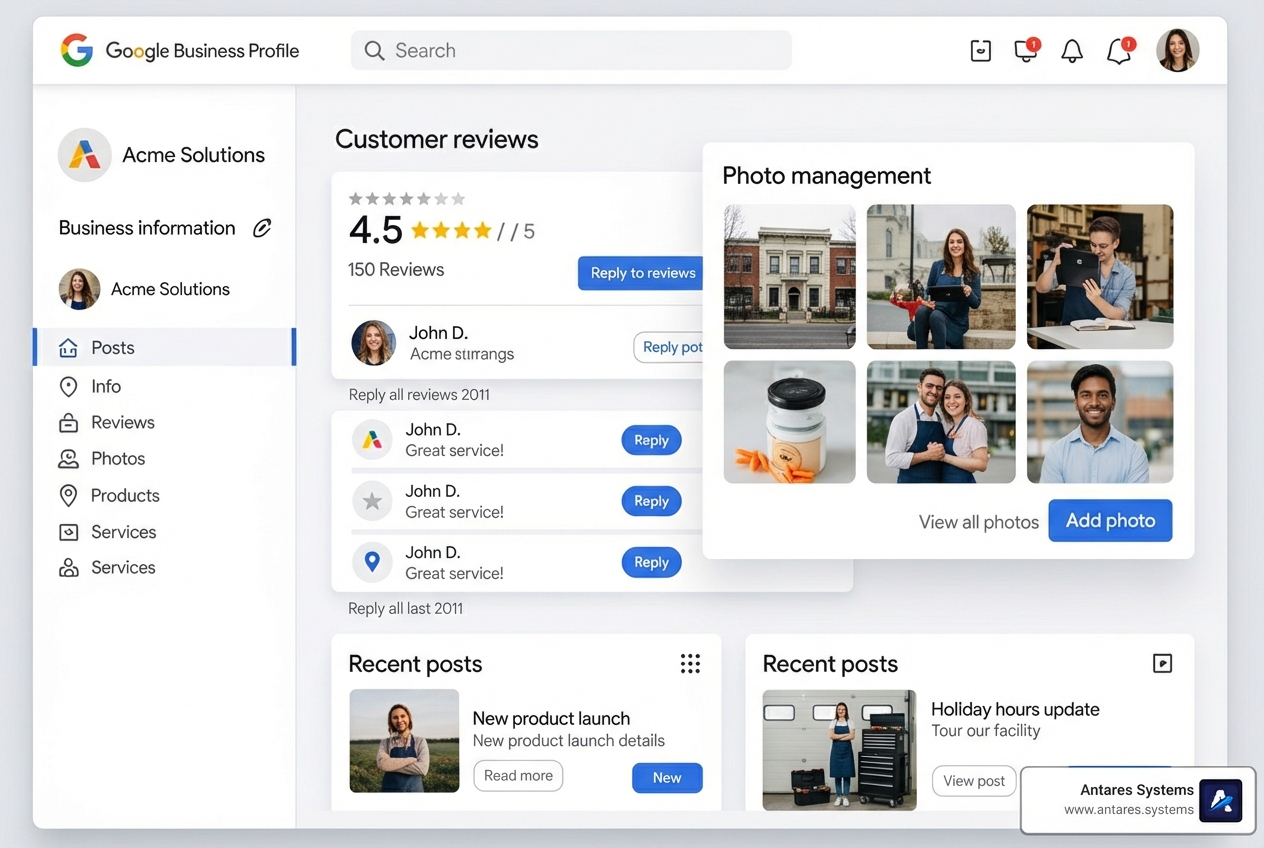
Your Google Business Profile(GBP), formerly Google My Business, is your most powerful tool for local search engine optimization. It's a free listing that allows you to tell Google (and potential customers) about your business, its services, location, hours, and much more. Think of it as your digital storefront and a direct line to Google's local search algorithm.
A complete Google Business Profile is essential for earning a spot in the “3-pack” and being easily found on Google Maps. The information on Google's map is taken directly from your Google Business Profile, so claim and fully complete it. Without a verified and optimized GBP, your business is virtually invisible in local searches and on Google Maps.
How Can Businesses Optimize Their Google Business Profile?
Optimizing your Google Business Profile is a continuous process, but it starts with accuracy and completeness. Here's how we approach it for our clients across Texas and Florida:
- Claim and Verify Your Profile: First things first, claim your business profile and verify it with Google. This signals legitimacy and trust.
- Complete All Information Fields:
Businesses with complete and accurate info are more likely to show up in local search results. Fill out every single field:
- Business Name: Use your exact legal business name.
- Address: Ensure it's precise and matches your physical location (e.g., your office in McAllen or your service area in Dallas).
- Phone Number: Use a local number that customers can easily call.
- Website: Link to your official business website.
- Categories: Choose the most accurate primary category and add relevant secondary categories. Google recommends using as few categories as possible, but ensure they are highly relevant.
- Hours of Operation: Keep these carefully updated, including special holiday hours.
- Description: Write a compelling description that includes relevant keywords naturally, highlighting what makes your business unique.
- Services/Products: List all the services or products you offer.
- Add High-Quality Photos and Videos: Visuals are powerful! Upload your logo, cover photo, exterior and interior shots of your business, and photos of your team and work. This helps customers know what to expect and adds a personal touch.
- Use Google Posts: Regularly publish updates, special offers, events, or news directly to your profile. This keeps your profile fresh and engaging.
- Encourage and Respond to Reviews: We'll dive deeper into reviews shortly, but actively seeking and responding to them is a huge part of GBP optimization.
Our Google Business Profile Optimization Services are designed to handle these intricate details, ensuring your profile is a lead-generating machine.
Building Trust and Authority: Citations and Reviews
What Are Local Citations and Why Are They Important for Local SEO?
Local citations are online mentions of your business's Name, Address, and Phone Number (NAP), and sometimes your Website (NAP+W). These mentions can appear on business directories (like Yelp or Yellow Pages), social media platforms, industry-specific sites, or local government listings.
Citations act as trust signals for Google. The more consistent and accurate your NAP information is across the web, the more confident Google is about your business's legitimacy and location. This consistency reinforces your credibility, helping you rank higher than local competitors. Citation Inconsistency Is No.1 Issue Affecting Local Ranking.
How Can Businesses Build and Maintain Consistent Local Citations?
Building and maintaining citations requires diligence. Here's our strategy:
- Audit Your Existing Citations: Start by performing an NAP audit. Tools like Semrush's Listing Management or other online presence checkers can help identify where your business is listed and highlight any inconsistencies.
- Correct Inconsistent Information: This is crucial. Even minor discrepancies (e.g., "St." vs. "Street," or different phone number formats) can confuse search engines. Manually correct any inaccurate listings.
- Claim and Complete Key Directories: Ensure your business is listed on major general directories (Yelp, Facebook, Yellow Pages) and relevant industry-specific directories. For our clients in Houston or Dallas, this might also include local chamber of commerce sites.
- Leverage Local Platforms: Seek out listings on local community websites, industry associations, and local blogs.
- Be Consistent: Always use the exact same Name, Address, and Phone Number as listed on your Google Business Profile and website.
- Avoid Duplicate Listings: Duplicate listings can dilute your ranking signals. Actively search for and resolve any duplicate profiles for your business.
Building citations is an ongoing process. Regularly auditing and updating your listings ensures your local search engine optimization efforts are effective. Learn more about how Citation Distribution Why Claiming All Business Directories Can Help Your SEO.
What is the Role of Online Reviews in Local SEO?
Online reviews are the social proof that drives both customer decisions and local search rankings. They are critical to your success. Think about it: when you're looking for a new restaurant in Austin or a contractor in Miami, you're probably checking their star rating and reading comments, right?
Google certainly does. Reviews are a significant ranking factor for local SEO, influencing your prominence. Google uses signals like:
- Quality: The average star rating.
- Quantity: The total number of reviews.
- Recency: How recent the reviews are. Fresh reviews are more impactful.
- Keywords in Reviews: Google can pick up on keywords mentioned by customers in their reviews, further enhancing relevance.
Beyond rankings, reviews build trust and credibility. According to a survey, 99% of your audience reads reviews, and 92% now consider business owner responses to reviews to be part of providing high-quality, modern customer service. Ignoring reviews is a missed opportunity to engage with your customer base and gain valuable business intelligence.
How Can Businesses Encourage and Manage Customer Reviews?
Encouraging and managing reviews doesn't have to be daunting. Here's our playbook:
- Ask for Reviews: Don't be shy! Politely ask satisfied customers to leave a review. The best time to ask is immediately after a positive experience.
- Make it Easy: Provide direct links to your Google Business Profile review page, or even QR codes that customers can scan.
- Respond to Every Review:
This is non-negotiable.
- Positive Reviews: Thank the customer for their feedback.
- Negative Reviews: Respond quickly, professionally, and constructively. Acknowledge their concern, apologize if appropriate, and offer to resolve the issue privately offline. This shows potential customers that you care about service recovery. Ignoring negative reviews is often worse than receiving them.
- Monitor All Platforms: Keep an eye on Google, Yelp, Facebook, and any industry-specific review sites. Tools like Semrush’s Review Management dashboard can help you catch new reviews instantly.
- Use Reviews for Improvement: Analyze review sentiment for trends. What do customers consistently praise? What are common complaints? Use this feedback to improve your services.
Our reputation management services help businesses in the Rio Grande Valley and beyond cultivate a stellar online presence through proactive review management.
Optimizing Your Online Presence Beyond GBP
How Should Businesses Optimize Their Website Content for Local Search?
Your website is another critical component of your local search engine optimization strategy. While your Google Business Profile gets you into the Map Pack, your website helps you rank in the "local organic results" (the traditional blue links below the map).
Here’s how we ensure our clients' websites are locally optimized:
- Dedicated Location Pages: For businesses with multiple locations (e.g., an attorney with offices in Houston, Dallas, and San Antonio), create a unique, optimized page for each location. Each page should have unique content, local NAP, hours, photos, and testimonials specific to that location.
- Service Area Pages: If you're a service-area business (SAB) like a plumber in McAllen or an electrician in Mission, create distinct pages for each major service area. For example, a "Plumbing Services in McAllen" page and a "Plumbing Services in Edinburg" page. Ensure these pages offer unique, valuable content, not just duplicated text.
- On-Page SEO Fundamentals:
Apply standard SEO best practices to your local pages:
- Title Tags & Meta Descriptions: Include your target keyword and location (e.g., "Best Electrician Pharr TX | [Your Business Name]").
- Header Tags (H1, H2, H3): Use local keywords and location terms naturally throughout your page content.
- Content Quality: Provide unique, helpful, and comprehensive content that answers local customer questions.
- NAP on Website: Clearly display your NAP information on your contact page and in the footer of every page.
- Embed a Google Map: Reinforce your location by embedding a Google Map on your contact or location pages.
- Schema Markup: Implement LocalBusiness schema.org markup on your website. This structured data tells search engines specific details about your business (address, phone, hours, reviews) in a format they easily understand, which can improve how your information appears in search results and supports AI Overviews. Use Google's Rich Results Test to validate your schema.
What are Localized Keywords and How Can Businesses Find and Use Them?
Localized keywords are search terms that include a geographic modifier, helping customers find businesses in their immediate area. Instead of just "HVAC repair," people in the Rio Grande Valley might search for "HVAC repair McAllen" or "AC service Edinburg."
Here's how we find and use them:
- Brainstorming: Think like your customer. What would they type into Google if they needed your service in their specific town (e.g., "roofing company Brownsville," "web design Austin")?
- Google Autocomplete & "People Also Ask": Type your service into Google and see what suggestions pop up. These are real queries people are making.
- Keyword Tools: Tools like Google Keyword Planner or Semrush can help you find local search volumes and related terms.
- Local Competitor Analysis: See what keywords your local competitors are ranking for.
- Natural Integration: Once you have your list, integrate these keywords naturally into your website content, meta descriptions, Google Business Profile description, and even your review requests. Avoid keyword stuffing, which is against Google's spam policies and makes for a poor user experience.
Why is Mobile Optimization Essential for Local SEO?
We've mentioned it before, but it bears repeating: most local searches happen on smartphones. This isn't just a trend; it's how people live and shop today. When someone in San Antonio is looking for a coffee shop, they're likely using their phone while out and about.
If your website isn't optimized for mobile, you're essentially putting up a "closed" sign to a huge segment of your potential customer base. Mobile optimization means your website:
- Loads Quickly: Users abandon slow-loading sites.
- Is Responsive: It adapts perfectly to any screen size.
- Is Easy to Steer: Buttons are clickable, text is readable without zooming.
- Has Click-to-Call Functionality: A tap on your phone number connects them directly to your business.
Google prioritizes mobile-friendly websites in its rankings, especially for local searches. Ensuring your site offers a seamless mobile experience is fundamental to effective local search engine optimization.
Measuring Success and Avoiding Pitfalls
How Can Businesses Track Their Local SEO Performance?
Implementing local search engine optimization is only half the battle; tracking performance is crucial to know what's working. Here's what we monitor for our clients:
- Google Business Profile Insights:
Your GBP dashboard provides valuable data on:
- How customers find your business (direct, findy, branded).
- Where customers view your business (search vs. maps).
- Customer actions (website clicks, calls, direction requests).
- Photo views and quantity.
- Map Pack Rankings: Tools like Semrush's Map Rank Tracker allow us to monitor your position in the local 3-pack for specific keywords across different locations (e.g., "HVAC repair Houston," "web design Mission TX").
- Local Organic Rankings: Use tools like Google Search Console, Semrush, or Ahrefs to track your website's organic visibility for localized keywords.
- Website Analytics (Google Analytics): Monitor local traffic sources, conversions (form fills, calls), and user behavior on your location-specific pages.
- Review Monitoring: Keep track of the quantity, quality, and recency of your reviews across all platforms.
- AI Visibility: With the rise of AI Overviews in Google Search, we also monitor how AI-generated summaries mention our clients, ensuring our GBP descriptions and reviews are optimized for these new features.
Consistent tracking allows us to adapt our local search engine optimization strategies, ensuring our clients in places like Pharr, Dallas, and Miami are always ahead of the curve.
What Are the Key Steps to Implementing an Effective Local SEO Strategy?
A robust local search engine optimization strategy requires a systematic approach. Here's a summary of the key steps:
- Foundation First:
- Claim and fully optimize your Google Business Profile.
- Ensure 100% NAP consistency across all online platforms.
- Website Optimization:
- Create unique, high-quality location/service-area pages.
- Integrate localized keywords naturally into your content and meta tags.
- Implement LocalBusiness schema markup.
- Ensure your website is mobile-friendly and fast-loading.
- Build Authority & Trust:
- Actively encourage and manage online reviews, responding to all feedback.
- Build relevant local citations on directories and community sites.
- Earn local backlinks through community engagement and partnerships.
- Monitor & Adapt:
- Regularly track your local rankings, GBP insights, and website analytics.
- Stay informed about Google algorithm updates and evolving local search trends.
- Continuously refine your strategy based on performance data.
How Do 'Near Me' Searches Impact Local SEO Strategies?
"Near me" searches have revolutionized local search engine optimization. When a customer uses a search like "coffee shop near me" on their phone, they're expressing immediate local intent. Google Trends shows significant increases in 'near me' queries.
This means:
- Proximity is Paramount: Google's algorithm heavily weighs the searcher's physical location.
- Mobile-First Mentality: These searches are predominantly mobile, reinforcing the need for a mobile-optimized website and easy-to-access contact information.
- Google Business Profile Dominance: The Map Pack is often the first thing shown for "near me" queries, making GBP optimization even more critical.
- Urgency: Users are often looking for immediate solutions, so clear calls to action (directions, call button) are vital.
Our strategies for clients in the Rio Grande Valley, Austin, or Miami specifically target these "near me" behaviors, ensuring their businesses are the immediate solution for local searchers.
What Are Some Common Mistakes to Avoid in Local SEO?
Even with the best intentions, businesses fall into common local search engine optimization traps. We help our clients avoid these pitfalls:
- Inconsistent NAP Information: This is perhaps the most common and damaging mistake. Conflicting business names, addresses, or phone numbers across directories confuse Google and erode trust.
- Unclaimed or Unoptimized GBP: Leaving your Google Business Profile incomplete or unverified is like having a storefront with no signage. It's a huge missed opportunity.
- Ignoring Reviews: Not asking for reviews, or worse, not responding to them (especially negative ones), can severely damage your online reputation and local ranking.
- Keyword Stuffing: Overloading your GBP description or website content with keywords in an unnatural way is not only ineffective but can also lead to penalties. Google wants helpful, people-first content.
- Lack of Mobile Optimization: As discussed, a non-mobile-friendly website will drive away local customers and hurt your rankings.
- Duplicate Content: Copying content across multiple location pages or from other websites can harm your SEO. Each page needs to be unique and valuable.
- "Set It and Forget It" Mentality: Local search engine optimization is not a one-time task. It requires ongoing monitoring, updates, and adaptation to algorithm changes and market trends.
- Choosing Incorrect Categories: Selecting irrelevant or too many categories on your GBP can dilute your relevance for core services.
By avoiding these mistakes, your business can significantly improve its chances of winning the local game.
Ready to Win the Local Game in Your Area?
We understand that navigating the complexities of local search engine optimization can feel like a full-time job. That's where we come in. At Antares Systems, we specialize in helping local businesses like yours—from home services to legal and construction—dominate their local markets in the Rio Grande Valley, Houston, Dallas, Austin, San Antonio, and Miami.
We provide comprehensive local SEO services that cover everything from meticulous Google Business Profile optimization to building powerful local citations, managing your online reputation, and crafting localized website content that converts.
Don't let your competitors steal your local customers. It's time to put your business on the map, literally.
Are you ready to grow without the stress of juggling multiple vendors and get more leads that convert? Contact us today for a free internet business audit report and let's discuss how we can help your business thrive locally.